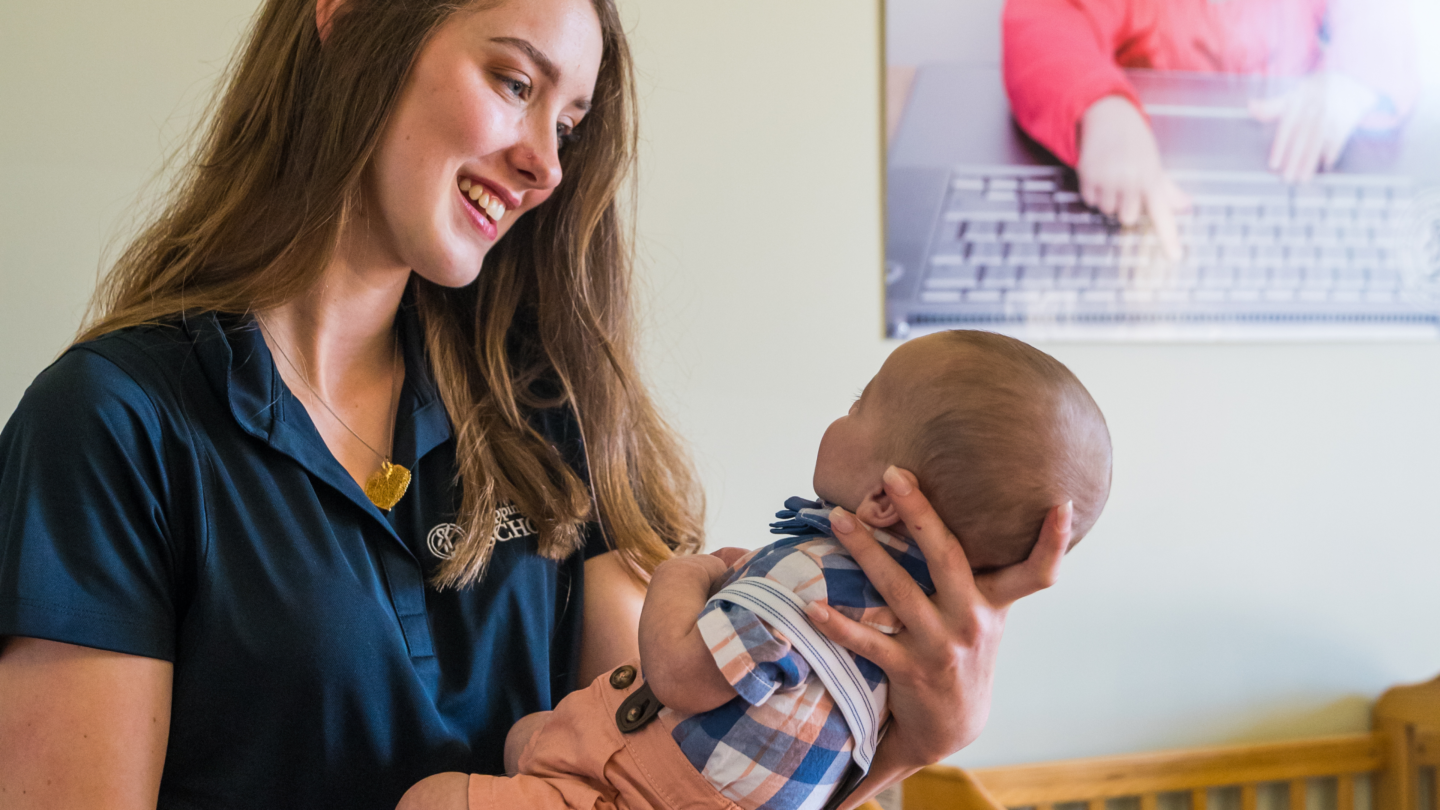


This month, Stepping Stone School will focus on the character development trait of trustworthiness. A trustworthy person is honest, follows the rules, keeps a promise, is not unkind, and does not take things that do not belong to him. Developing an attitude of trust, being trustworthy, and building trust with one another takes time, but through responsive caregiving, children learn in a manner which supports the development of trust.
According to developmental psychologist Erik Erikson, children begin learning trust in infancy. Erikson developed a theory of psychosocial development in which he identified the first stage in his model as trust vs. mistrust. During this time in a child’s life, she will learn she can trust those caring for her based on their consistent care responding to and meeting her needs. To build trust at this age, acknowledge and respond to children as they try to communicate their needs through cries or babbles.
As toddlers, children are developing a better understanding of how they relate to others socially. Exploring feelings is a big part of this development process. To build trust at this stage, look for ways to explore feelings by reading books together, look at pictures showing children who are demonstrating various feelings, or use puppets to act out different emotions.
During the preschool years, children are beginning to develop an understanding of honesty which is an aspect of trustworthiness. Through this new understanding, children can identify characters in books who are being honest or dishonest. To build upon this understanding and teach trust, consider reading stories such as The Boy Who Cried Wolfor The Berenstain Bears and the Truth by Stan Berenstain. Talk through the behaviors of the characters and how certain characters were acting.
Throughout grade school, children begin to recognize the importance of trust in relationships between their

families and their peers. Focusing on trustworthiness, ask children to identify qualities in their friends which make them good friends, discuss situations in which trust is important and look for examples of trustworthy behaviors.
Teaching trustworthiness begins in infancy and continues throughout life into adulthood. Children continue to develop their understanding of trust throughout their lives. At Stepping Stone School, we want to lay those foundations on which trust can build. Thank you for sharing your precious children with us.
References:
Fremion,A. (2014). “Starting Your Child on the Way to Becoming a Healthy and Happy Adult Starts in Infancy.” Retrieved from http://www.pregnancyandbaby.com/baby/articles/939215/parents-of-infants-and-trust-relationships
McCready, A. (2011, April 19). “Why Kids Lie, and 7 Ways to Get Them to Tell the Truth.” Retrieved on from http://www.today.com/parents/why-kids-lie-7-ways-get-them-tell-truth-1C7398399?franchiseSlug=todayparentsmain
McLeod, S. (2017). Erik Erikson. Retrieved from https://www.simplypsychology.org/Erik-Erikson.html
Ramsay, N. (2008, January 3). “Teach Your Child to Be Trustworthy.” Retrieved from http://www.teachkidshow.com/teach-your-child-to-be-trustworthy/