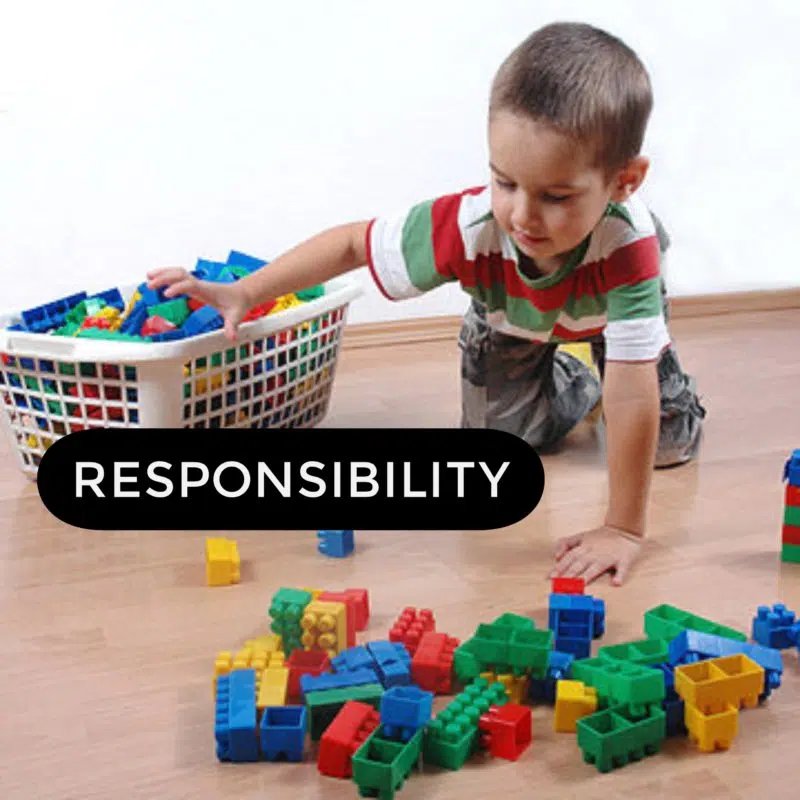
Just after my daughter turned two, she moved into Ms. Alisa’s classroom at one of our Stepping Stone School locations. My daughter had a doctor’s appointment that day, so I picked her up early. I walked into the classroom just as the children were transitioning between activities and was amazed to see each child pick up his or her toys and place them back on the shelves where they belonged.
“How did you get them to do that?” I asked. “They’re cleaning up after themselves and putting things away nicely… they’re only two!”
Alisa looked at me very matter-of-factly, “They know our routine. When it is time for a new activity, we clean up before we can move on.”
Alisa taught responsibility by making it an expectation in their daily routine. This group of young children demonstrated responsibility by cleaning up after themselves and taking care of the toys.
How do we, as parents, teach responsibility to our own children?
- Model responsibility. Show up for events on time and honor the promises you make. Children will learn that responsible people are also reliable people, people they can trust.
- Start young. Even very young children, as we saw from the earlier example, can take on specific tasks. Provide children with age-appropriate chores. Make them honor their commitments or if they are unable to keep a promise, encourage them to pick up the phone to call and explain why they are not going to be able to follow through at this time.
- Make it a habit. Establishing routines with built-in expectations teaches responsibility. Reminding your child as a toddler to put her dirty clothes into a basket, yields dividends down the road when she is doing her own laundry as a college student.
- Let them help you (even if it means it will take longer). Young children want to help, but sometimes it feels like their “help” creates more work in the end. Try breaking larger tasks down into smaller pieces so children can be successful.
- Manage expectations. When asking your four-year-old to make his bed, keep in mind it may not be perfect, but the important thing is that he is learning to take care of his belongings and helping around the home.
Responsibility can be taught.
It is woven into our daily routines – the opportunities we give our children to help around the house and to follow-through with their commitments. We teach our children daily through our own actions and follow-through. Responsible behaviors are present where expectations are high.