
“That’s what chess is all about. One day you give your opponent a lesson, the next day he gives you one.” – Bobby Fischer, American chess grandmaster
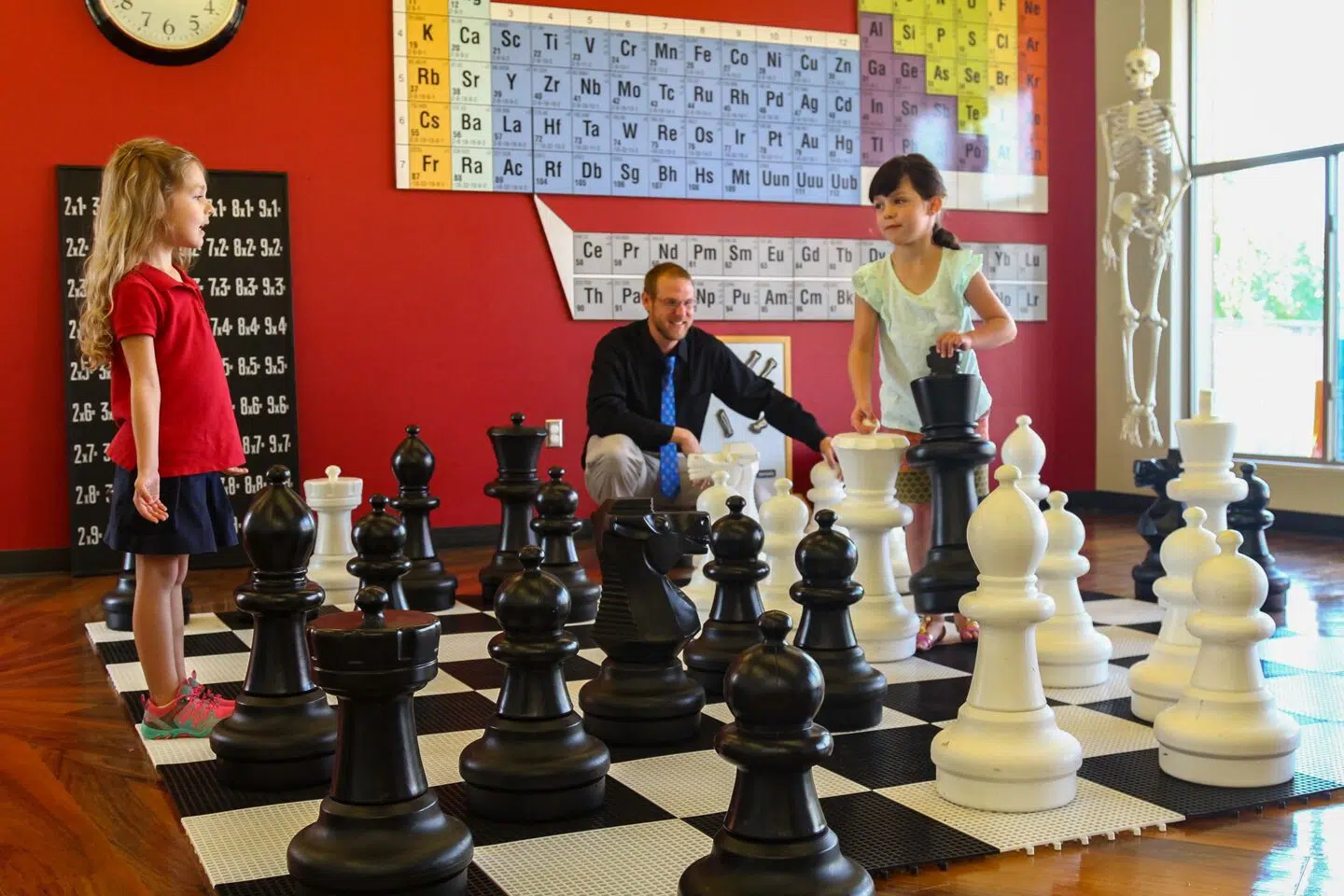
Chess – These classes and tournaments provide a multitude of benefits to our young strategists! Children who play chess have been shown to improve their math and reading skills, but the benefits go far beyond academic. Stepping Stone School is proud to introduce the traditional, yet revolutionary game of chess to its advanced pre-k and school-age masterminds! These students are learning about the history of the game as well as how the pieces move and strategies for winning. The classes will also include tournaments to allow the students to practice their new skills.
Children who play chess have been shown to improve their math and reading skills, but the benefits go beyond academic.
Chess can help your child reach full potential by:
- Encouraging the development of analytical and decision-making skills;
- Calling upon higher-order thinking skills to analyze consequences and visualize future possibilities;
- Increasing one’s ability to recognize complex patterns;
- Strengthening your child’s mental clarity, fortitude, stability and overall health;
- Teaching a healthy sense of fairness;
- Improving your child’s self-esteem and communication skills; and
- Aiding in the growth of certain areas in the brain & mind.