
As this year’s calendar flips to its final month, I reflect on moments over the past eleven, noting certain instances which stand out in my mind. These times are often the result of either being on the giving or receiving end of compassion. Whether by tangible gifts of charity or simply the exchange of encouraging words, compassion takes many forms.
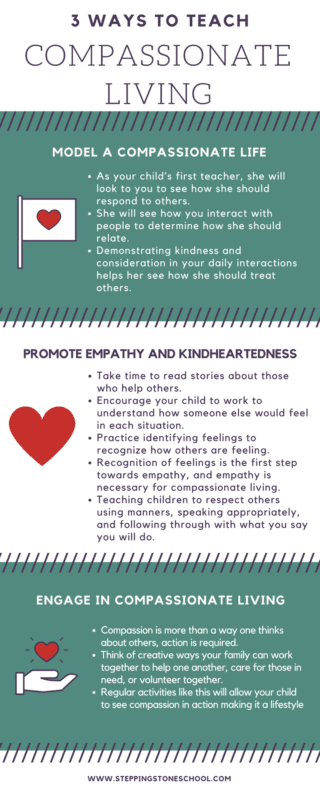
In children, compassion may involve one child offering a comfort item like a teddy bear or blanket to a crying child. Helping a friend pick up her toys or asking someone to come play. Recent research supports theories stating children have an innate capacity for compassion (Seppälä, 2013). But this capacity must be cultivated for a child to act compassionately towards another. There are several ways to teach compassion:
- Model a compassionate life: As your child’s first teacher, she will look to you to see how she should respond to others. She will see how you interact with people to determine how she should relate. Demonstrating kindness and consideration in your daily interactions helps her see how she should treat others.
- Promote Empathy and Kindheartedness: Take time to read appropriate stories about those who help others. Encourage your child to work to understand how someone else would feel in each situation. Practice identifying feelings to recognize how others are feeling. Recognition of feelings is the first step towards empathy, and empathy is necessary for compassionate living. Teaching children to respect others using manners, speaking appropriately, and following through with what you say you will do. All of this enables an attitude of kindness and empathy towards others.
- Engage in compassionate living: Compassion is more than a way one thinks about others, action is required. Think of creative ways your family can work together to help one another, care for those in need, or volunteer together. Regular activities like this will allow your child to see compassion in action making it a lifestyle.
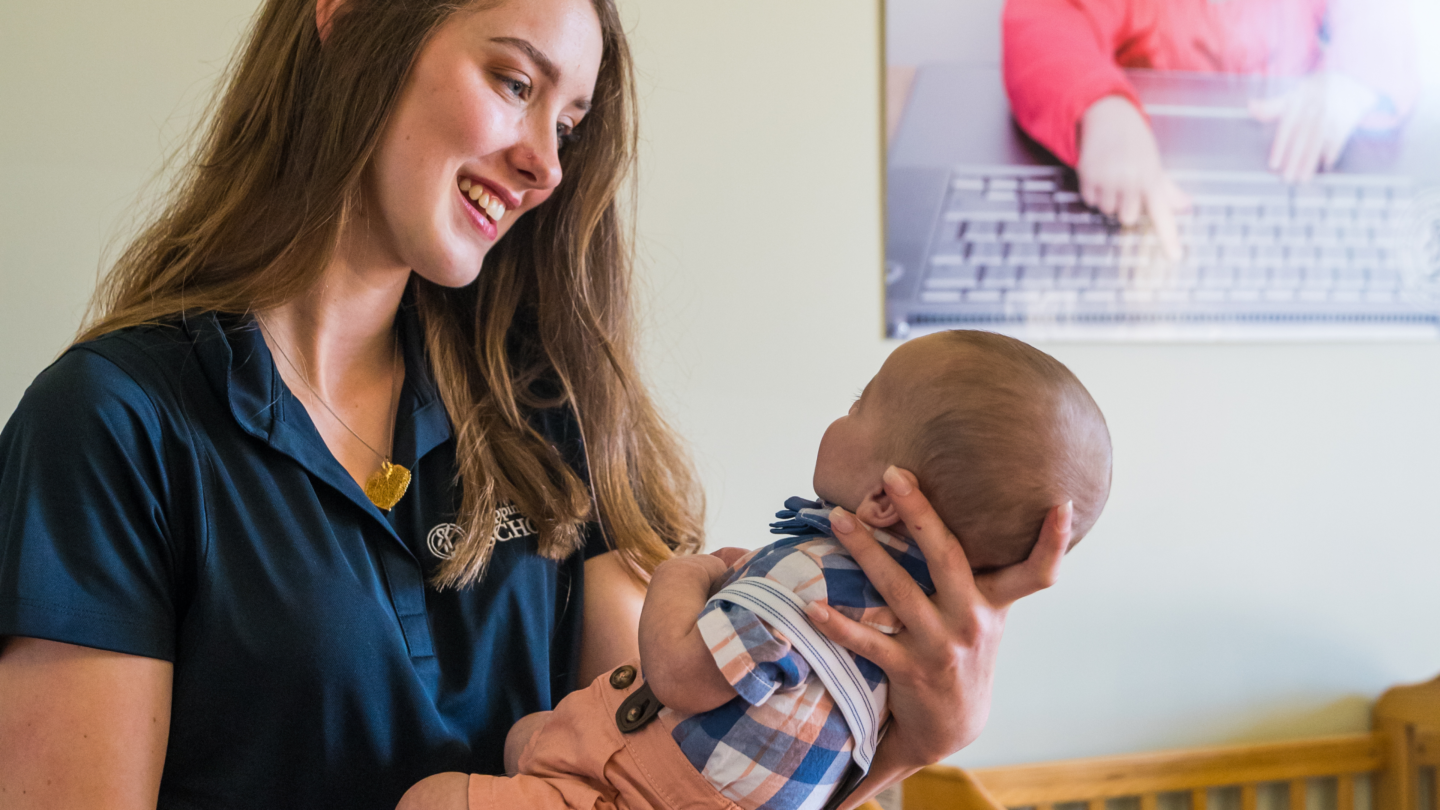
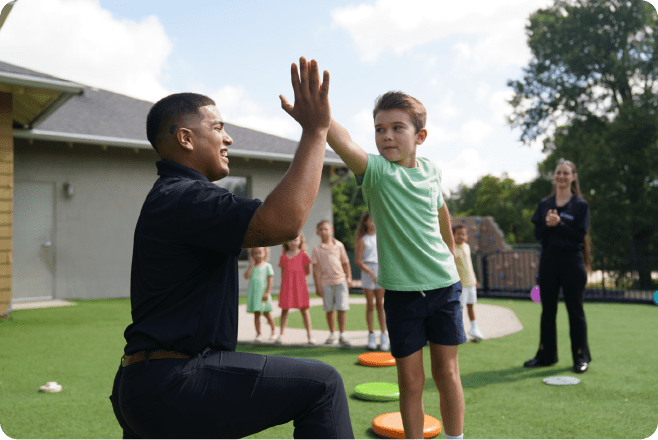
Throughout December, Stepping Stone School is teaching compassion in meaningful ways. Whether it is modeling compassionate care in our infant classrooms, developing empathy by learning to recognize feelings in our toddler classrooms, identifying acts of kindness within our pre-kindergarten classrooms, or engaging in compassionate living by visiting residents of local nursing homes in our school age classrooms. Stepping Stone School is committed to developing children who participate in compassionate living by focusing on consideration, kindness, and empathy.
Resources:
Adams, J. (2015). “Raising a Compassionate Child.” Retrieved from http://www.parenting.com/article/raising-a-compassionate-child
Keltner, D. (2004, March 1). The Compassionate Instinct. Greater Good Magazine: Science-Based Insights for a Meaningful Life. Retrieved from https://greatergood.berkeley.edu/article/item/the_compassionate_instincthttps://www.psychologytoday.com/blog/feeling-it/201306/compassion-our-first-instinct
Parent and Child. (2015). “Raising a Caring and Compassionate Child.” Retrieved on November 23, 2015 from http://www.scholastic.com/parents/resources/article/social-emotional-skills/raising-caring-and-compassionate-child
Seppälä, E. (2013, June). Compassion: Our First Instinct: Science Shows That We Are Actually Wired for Compassion, Not Self-Interest. Retrieved From https://www.psychologytoday.com/blog/feeling-it/201306/compassion-our-first-instinct
Taylor, J. (2014, Jul 28). “5 Ways to Instill Compassion in Your Children.” Retrieved from https://www.psychologytoday.com/blog/the-power-prime/201407/5-ways-instill-compassion-in-your-children
Whitson, S.(2014, Jul 10). “8 Ways to Teach Compassion to Kids.” Retrieved on November 23, 2015 from http://www.huffingtonpost.com/signe-whitson/8-ways-to-teach-compassio_b_5568451.html