
Astounding new research estimates that young children who have been read to multiple times a day from infancy until they reach school age have heard an average of 1.4 million more words than their peers who have never been read to. Even if a child has only heard one book a day, she has still heard 290,000 more words by the time she reaches kindergarten. (Grabmeier, 2019)

The language in books, unlike conversational language, introduces children to more complex vocabulary words not always heard in day to day conversation. Therefore, well-read children enjoy a rich vocabulary, improved communication skills, increased knowledge of a wide range of topics, improved attention spans, and are often more self-confident than their lesser-read peers
The National Association for the Education of Young Children (NAEYC) upholds, “Reading aloud is important from infancy through the high school years. Families and teachers can create and continue a tradition, introduce and reinforce the pleasures of reading, and, as children get older, set the stage for meaningful conversations about numerous topics.” (Koralek, 2005).
At Stepping Stone School, we work to create a literacy-rich environment from our infant classrooms through our school-age programs so all children can experience language growth and development throughout the years.
We have provided several ideas to support families in building early language skills at home:
- Read 3-5 books to your child throughout the course of the day
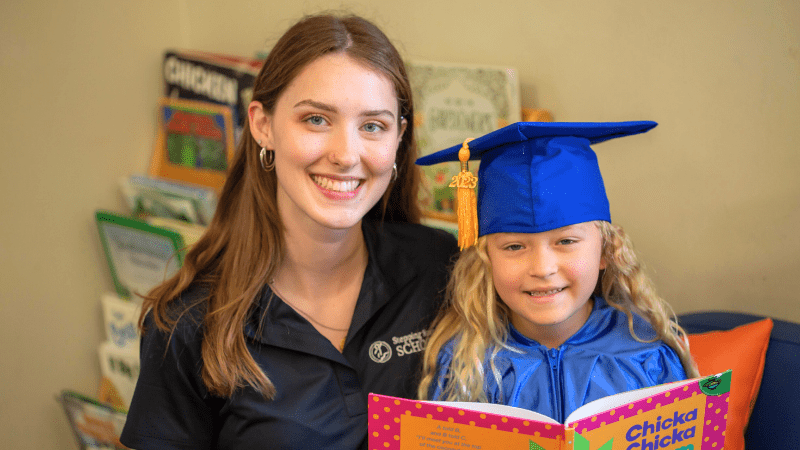
- Allow your child to engage in reading with you by turning the pages or pointing to pictures
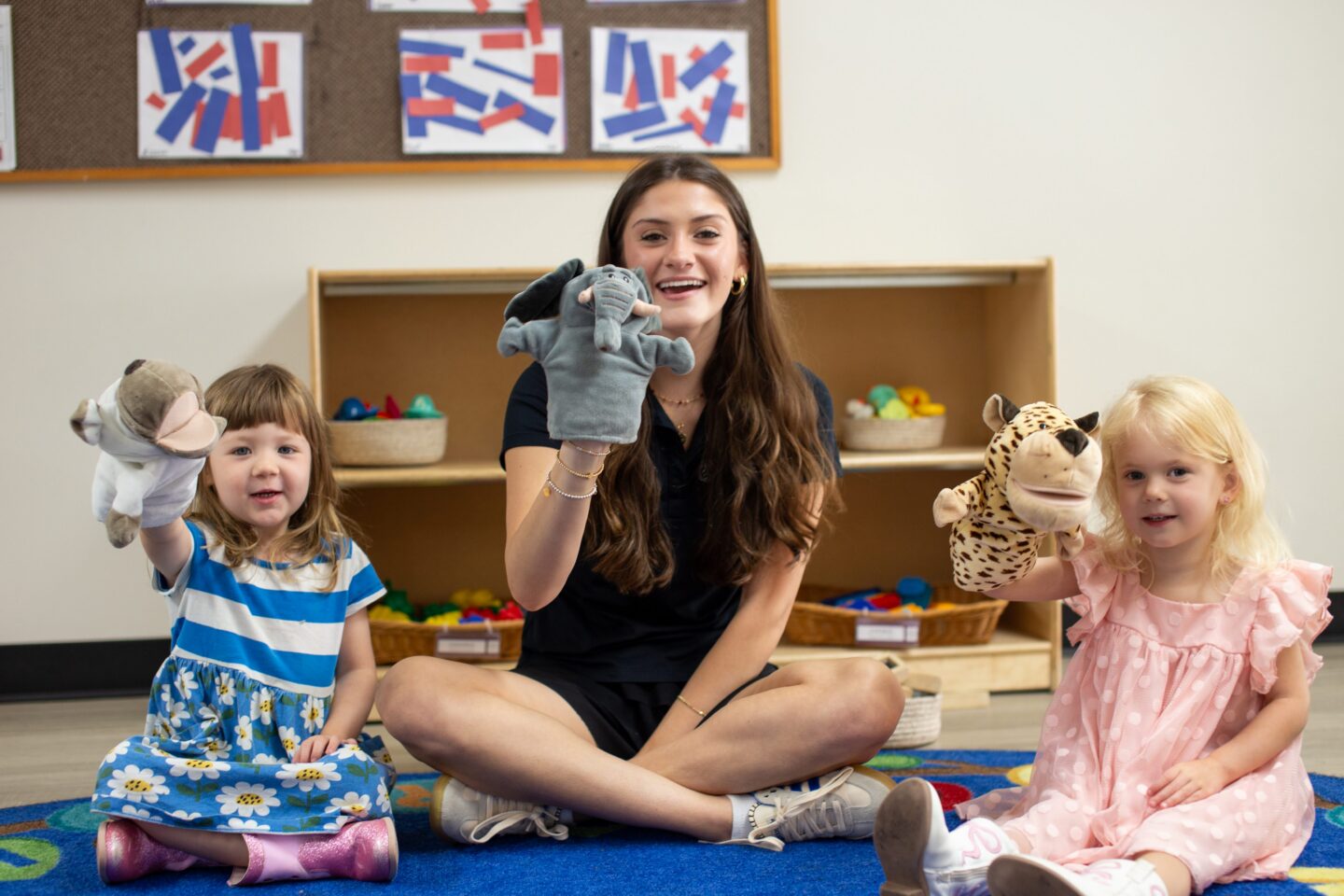
- Make books come alive by adding voices to the characters
- Know that even a few minutes a day makes a big impact later, even if you do not finish a story
- When your child is old enough, invite him to “read” the book to you especially if it is a favorite you have read together many times

Beyond the academic benefits of reading together, it is the special time together that shapes your child’s attitude around reading. When parents and caregivers take time to read together, the child associates good safe feelings around the practice of reading which adds to his or her interest in reading throughout life.
Resources:
Grabmeir, J. (2019, April 4). A Million Word Gap for children who aren’t read to at home. Retrieved from https://news.osu.edu/a-million-word-gap-for-children-who-arent-read-to-at-home/
Koralek, D. (2005). “Reading Aloud with Children of All Ages.” Retrieved from https://www.naeyc.org/files/yc/file/200303/ReadingAloud.pdf
Lewis, B. (2015). ‘I Want My Baby to Read” Supporting Parents in Guiding Early Language and Literacy Development. Retrieved from https://www.childcareexchange.com/article/i-want-my-baby-to-read-supporting-parents-in-guiding-early-language-and-literacy-development/5022242/
Zero to Three. (2003). Early Literacy. Retrieved from www.zerotothree.org/child-development/early-language-literacy/earlyliteracy2pagehandout.pdf